The Welcome Break at the Edge of the Map: Turning UK Service Stations Into Dungeon Hubs
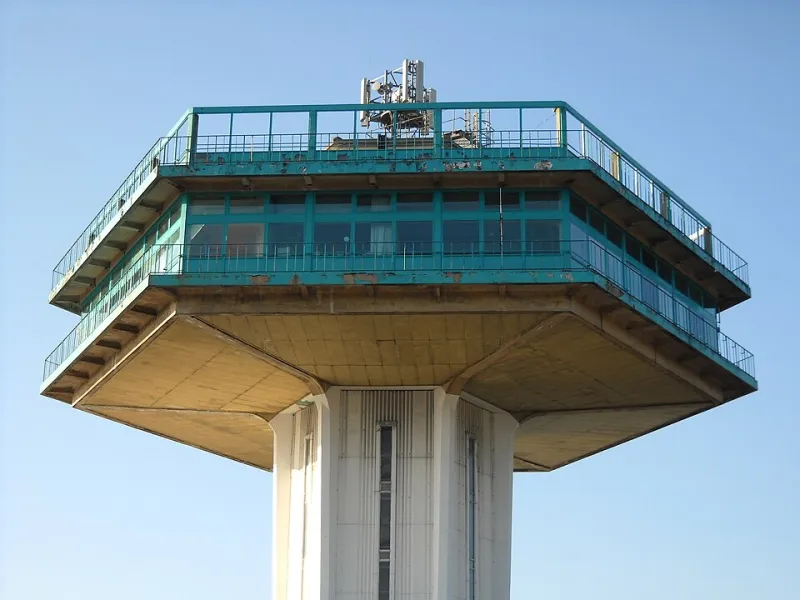
Photo: Bungalow-build, CC BY-SA 4.0, via Wikimedia Commons
Every campaign needs a place to come back to. Somewhere to sleep, flog loot, hear a rumour and get pointed at the next terrible decision. And every campaign, it seems, chooses a tavern — wooden beams, a barkeep with a secret, a bard who should be doing something more useful.
Honestly? Weak hub. Britain has a far better template sitting right there on the M1, and your players have all stood in it at half eleven at night, eating a lukewarm pasty and wondering what their life is for.
The motorway service station is a dungeon level. It's a liminal hub. It's a faction crossroads with a car park attached. And UK fantasy writing keeps sailing straight past it on the way to a castle that's mostly a gift shop.
The tavern problem
A tavern does one job. It feeds you and it gives you a room, and then it sits there being picturesque while the party argues about marching order.
A service station does six jobs before breakfast. Food, fuel, retail, rest, information, toilets, cash, sometimes a shower, sometimes a dog-walking field. It's a transit node, a social crossroads and a small economy with its own pricing logic — everything four pence more expensive than it should be, because you're trapped and everyone knows it.
That's not set dressing. That's a hub with factions built in.
Liminality you can describe in three senses
You don't have to explain a service station to a UK table. You just have to remind them. Say "terrazzo floor" and "hand dryer" and "the air smells of fried breakfast and disinfectant" and watch six people go somewhere specific in their heads.
That's the trick. The building is liminal — nobody's from there, everyone's only passing through — but it's also fiercely familiar. Same signage. Same food court. Same low suspended ceiling with the fluorescent panels that hum at 3am. The 40-year-old map on the wall with the peeling corner.
That repetition is a gift. Recur the same chain of service stations across a campaign and you get the quiet horror of recognising a place you've never been. Vary it slightly each time — one is busier, one is half-derelict, one has clearly been refurbished by someone with ambitions — and the party starts reading the state of the world off the state of the forecourt.
Factions of the forecourt
Give each of these a want, a lever and a secret the party can find, and your hub runs itself for six sessions.
- The Franchise. Corporate, rule-bound, allergic to trouble, obsessed with consistent pricing. Useful, hidebound, and the reason the coffee is always identical wherever you go.
- The Fuel Barons. They control the pumps and therefore the clock. Price fluctuations are a story engine, not a spreadsheet.
- The Night Shift. Cleaners, security, the person on the till at 4am. They know everything, they're paid to look away, and they're the best ally in the building.
- The Travellers. Lorry drivers, coach parties, people with a boot full of something. They move between hubs, so rumour travels with them.
- The Locals. Dog walkers, teenagers, staff on a break. They treat the place like a village and resent everyone else for not doing the same.
That's five factions under one roof and nobody has to own a castle.
The economy of a pit stop
Here's the mechanical heart of it: safety costs money, and everyone's overcharging.
Charge a 20% premium on anything bought in the hub and watch your players make a real decision for once. Do we pay for a proper bed, or sleep in the car and save the coin for the road? Do we buy fuel here, or gamble on the next junction?
Fuel is a countdown timer pretending to be a resource. "Next services: 32 miles" is a prophecy. Lean on it.
And the long rest is the best bit. Hotel next door, corridor with a carpet doing a lot of work, a door that doesn't quite latch. The room is safe. The corridor is where the plot is.
The GM's forecourt checklist
- Name it after the junction, not the town. J15a beats "Northampton Services" every time. It puts a number in the players' heads instead of a place.
- Pick five zones. Forecourt, food court, retail, toilets and amenities, car park and HGV park. That's your map.
- Give each zone one sound and one smell. Players navigate by senses long before they navigate by grid squares.
- Place one NPC who never leaves. The night-shift supervisor. Always on. Always watching the doors.
- Put two factions in the food court who barely tolerate each other. The great hall has sightlines. Use them.
- Keep the closed roadsign up. A sign to something that no longer exists is worth three pages of lore.
- Price everything. If money means nothing at the hub, the hub means nothing.
- Add one wrong detail. A poster for a closure that happened years ago. A town on the map that isn't on the road.
- Decide what's behind the staff-only door. Decide before session one. The players will inevitably go in.
- Set the cost of leaving. A toll, a check, a delay. Exit should be a decision, not a scene transition.
Mapping the thing
Keep it simple. The food court is the great hall — everyone can see everyone, the seating is bolted down, the noise is constant. The toilets are the corridor for private conversations and bad ideas. The car park is the outside: no witnesses, weather, room for a fight that nobody reports. The HGV park is for smuggling, quiet deals and the person who sells things out of a van.
The forecourt sits at the edge. Bright, exposed, the pumps ticking over. Every good dungeon has an entrance you can see coming.
Three hooks for the road
- The vending machine restock arrives, and the delivery driver insists he dropped the keys somewhere on site.
- A lost child sits in the food court for six hours. Every coach party denies all knowledge. The CCTV shows her walking in alone — and, crucially, walking in twice.
- A closure notice goes up. The site is being "redeveloped". The night shift, the locals and the fuel barons all have wildly different plans for the last night.
Britain's most honest fantasy architecture
Our castles are mostly ruins with an audio guide. Our cathedrals are heritage sites. But the service station is a genuinely modern shared space — the only building in Britain where every class, every accent and every conceivable errand ends up in the same room at the same time, buying the same overpriced sandwich.
Tebay exists, and proves the point beautifully: give the place a bit of care and people will plan their journey around it. That's a hub. That's not a room you skip through between dungeons — that's a place your party becomes loyal to.
So next time the campaign needs a home base, don't build a tavern. Build a stop. Pick a junction. Make the coffee terrible and the prices outrageous, and let the party decide whether the night shift deserves to keep their jobs.
They'll remember J15a far longer than they'd remember another inn with a bard in it.