Slow Water, Sharp Play: Running a Tabletop Campaign at Canal-Lock Pace
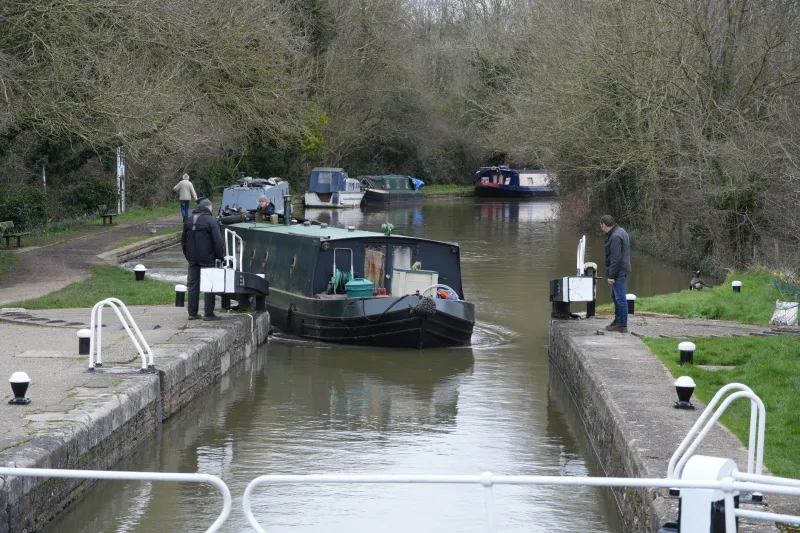
Most tabletop timers are loud. A ritual completes in six rounds, a ritualist screams, the ceiling starts leaking. A canal lock flight is the opposite. It is a timer made of politeness, iron paddles, dripping gates and the quiet dread of a boat waiting behind you. That is exactly why it works.
A lock flight is a staircase of chambers. You enter, close the gate, wind a paddle, wait for the water to do its slow work, then repeat. On a busy day, you queue. On a bad day, a gate leaks, a paddle jams, and the whole flight becomes a negotiation with physics and strangers. For a tabletop campaign, that is not a travel montage. It is a structure.
The Lock Flight as a Campaign Clock
Forget the bomb under the table. Use the water level. Each chamber in a lock flight can be a phase of an adventure, and each phase has a clock: the water rising or falling, the queue behind you, the daylight bleeding out. The party is not racing a countdown so much as managing a sequence of bottlenecks.
This changes encounter design. A lock chamber is a room with rules. The gates are thresholds. The paddle gear is an action with a cost. The balance beam is cover, or a barrier, or a weapon in the wrong hands. The lock cottage is a social encounter with tea and suspicion. The side pond is a moral choice about water that belongs to everyone.
The first design shift is to make time tangible. Give the party a pool of lock-minutes. Opening a paddle costs some. Helping another boat costs more but buys goodwill. Forcing a gate costs less time and more reputation. Suddenly, the fastest route is not automatically the sharpest. Sometimes the party should let the rival haulier take the next chamber, spend their own resources on information, and arrive at the top gate fresher than the people who rushed.
Paddles, Priorities and the Cost of Haste
Canal locks are full of small, physical verbs: wind, push, lift, drop, moor, check, wait. Use them. A skill check is fine, but a choice is better. Do you send the strongest character to the paddle gear, or the one who can read the gauge? Do you help the stranded hire boat, or protect your cargo? Do you moor on the lock landing, which is bad towpath etiquette, or walk the extra distance and lose time?
That etiquette matters because canals are shared infrastructure. In a campaign, it becomes faction logic. The Canal Conservancy inspector wants the flight run by the book. The local angling club wants no disturbance near the side ponds. The rival haulier wants the queue to move in their favour. The lock keeper wants everyone to stop pretending the gate is not leaking. None of these groups need to be villains. They just need priorities that collide when the water is low.
UK small-press tabletop games are already good at this kind of social machinery. Games such as Liminal and The Dee Sanction treat institutions, local rules and quiet negotiations as part of the adventure rather than a cutscene. Canal-lock design borrows that impulse and makes it physical. The rules are not written on a character sheet. They are written on a noticeboard by the lock cottage, and half of them are ignored by everyone until someone official turns up.
Mapping a Flight Without Drawing a Corridor
Do not map a lock flight as a straight corridor with rooms. Map it as a side elevation and a queue. The elevation shows the rise or fall between chambers, the gates, the paddle gear, the bywashes and the side ponds. The queue shows who is waiting, who has priority, and who is pretending not to be in a hurry.
Use lock numbers instead of grid squares. A chamber is a page, not a room. On each page, note three things: the physical obstacle, the social pressure and the clock. The physical obstacle might be a stiff paddle or a leaking gate. The social pressure might be a boater who insists they were here first. The clock might be the inspection launch due at noon.
Add a towpath map for the spaces between locks. That is where ambushes, conversations and bad decisions happen. Mark the bridge holes, the winding hole, the mooring bollards and the lock cottage garden. If you want a quick visual, use a strip of paper with seven boxes and a queue of tokens beside it. The party can see the flight, and they can see the line of people they are annoying.
Ready-to-Run: The Marsworth Seven, 2026
Here is a scenario for a 2026 campaign. The party has been hired to move a narrowboat called The Pale Otter through a seven-lock flight before dawn. The cargo is a sealed crate. The employer says it is seed stock for a restored orchard. The Canal Conservancy inspector says it is unlicensed. The rival haulier says it is theirs. The angling club says it is attracting rats.
Run the flight as seven chambers. Each chamber has one obstacle, one faction and one clock.
- The Bottom Gate. A queue has formed. The rival haulier offers to let the party go first if they share what is in the crate. The clock is the inspector's bicycle lamp approaching.
- The Leaking Gate. The chamber will not fill properly. The party can wait, patch it, or use the bywash to force the level. Patching costs time and earns the lock keeper's respect.
- The Side Pond. The angling club has found something in the water. It is not a body, but it is evidence. The party can hide it, report it, or use it as leverage.
- The Jammed Paddle. A physical challenge with a social cost. Every failed attempt makes noise. Noise brings the inspector.
- The Lock Cottage. Tea, biscuits and a ledger. The lock keeper knows who really owns the crate. They will trade that information for a promise about the side pond.
- The Rival's Rope. The haulier tries to moor across the lock landing. The party can intervene, wait, or cut a rope in the dark. Each choice changes the final queue.
- The Top Gate. The crate is not seed stock. It is a seed bank, and the inspector knows. The final choice is not whether to fight, but whether to open the lock, open the crate, or open a negotiation.
The flight should take most of a session. Do not rush it. The point is that the party feels the water move, the queue shift, and the cost of every shortcut.
Why Slow Is Sharp
Canal locks are a useful antidote to the modern tabletop habit of making everything faster, louder and more explosive. They teach players to read a situation, spend resources carefully and treat strangers as part of the terrain. In 2026, that is a valuable kind of play. The slowest route is not always the safest, but it is often the sharpest. And when the top gate finally opens, the party should feel like they earned the water beneath them.