The Snug Is the Dungeon: Why Britain's Boozers Beat Its Castles
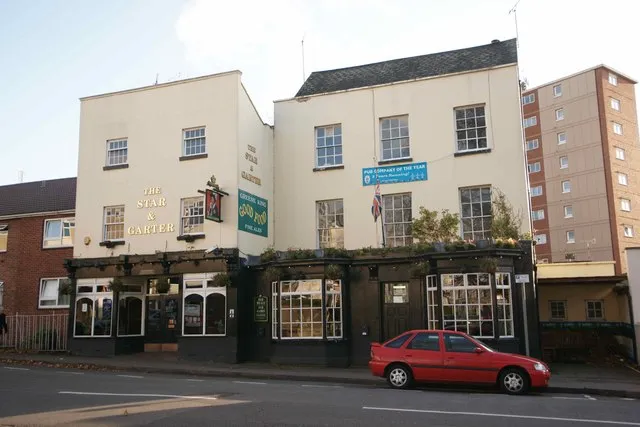
Photo: Colin Craig, CC BY-SA 2.0, via Wikimedia Commons
Every tabletop GM builds a castle eventually. The throne room, the guard barracks, the improbably wide spiral staircase. It's the default dungeon, and it's fine. It is also, frankly, a bit dull. Castles are built to a plan, and plans are symmetrical, legible and predictable. A British pub is none of those things. It has grown over centuries like a coral reef made of bad decisions, and that is exactly why it makes a better dungeon.
Castles Are Built. Pubs Accrete.
A castle says: someone with power drew this on a sheet of parchment and made people build it. A pub says: a landlord knocked through a wall in 1974, someone else bricked up a window in 1991, and there's a step down into the corridor by the toilets that nobody can explain. That is dungeon design gold. Real dungeons should feel like they were made by generations of people who never spoke to each other. The pub gives you that for free.
Walk into any decent boozer and count the floor levels. The main bar, the step up to the snug, the two steps down to the back room, the cellar hatch that's half-hidden behind a barrel. Nobody designed that circulation. It emerged. Your players will feel the difference immediately, because they've all been in buildings like it.
The Snug Is Your Boss Room
Forget the throne room. The snug is where the real power sits: low ceiling, a single door, a bench that traps you in place, and sightlines that let whoever's in the corner see you before you see them. It's a social boss room. You don't fight the regular who's been drinking there since 1987. You negotiate with them, and the negotiation has rules they invented.
Practical advice: map the snug as a dead-end with one entrance and a big table as difficult terrain. Put the campaign's most important NPC in it, and make the players come to them. The asymmetry does the work. If your dungeon's final chamber has one door and a low beam that forces tall characters to stoop, you've already won.
Cellars, Floods and the Underdark
The cellar is the dungeon level. It's damp, it's low, it's full of barrels that count as cover, and it has at least one thing down there that the landlord doesn't talk about. The cellar flood is the best environmental hazard in British gaming: not a monster, just water rising while the players try to retrieve something from a shelf. Give it a timer. Three rounds until the bottom step is gone, five until the lights go out.
Don't map the cellar in five-foot squares. Map it in zones: the barrel run, the flooded section, the old smuggling tunnel that's been bricked up for a century. That's how you'd actually navigate it, and it keeps the pace up when the water's rising.
Lock-Ins, Quiz Nights and Other Timed Events
Two pub rituals translate directly into encounters. The first is the lock-in: doors barred, curtains drawn, a closed circle of people who are not leaving until the landlord says so. In dungeon terms, that's a countdown. The players are inside, the exit is barred, and something is happening in the next room. Run it as a real-time pressure cooker, not a combat.
The second is the quiz night. A quiz is a skill challenge with a rival party, and the rival party is always the table by the window who've won it four years running. Let your players cheat, bribe, or recruit the quizmaster. The prize doesn't matter. The social dynamics are the encounter.
Mapping the Boozer: Practical Advice
- Use the real plan. Sketch your actual local from memory, then change the names. You'll get more believable asymmetry than you would inventing from scratch.
- Give it three entrances. A main door, a side door for the smokers, and a back door that opens onto an alley. Dungeons with one entrance are corridors. Dungeons with three are puzzles.
- Treat the beer garden as wilderness. It's the only part of the pub with weather, and weather is an encounter.
- The toilets are a trap corridor. Dead end, bad lighting, one door. Put something in there that the players have to walk past twice.
- Label rooms by relationship, not by size. The snug is the boss room because of who's in it, not because it's large. The corridor by the loos is a chokepoint because everyone has to pass through it. That's how your players will remember it.
Case Study: The Salter's Arms
In a campaign I ran last year, the party's home base was a fictional pub called the Salter's Arms, in a fictional town on the edge of the Fens. I mapped it in an afternoon: the main bar, the snug, a back room with a dartboard, a cellar, a beer garden walled in by crumbling brick, and a corridor that connected all of them in the least efficient way possible. On paper it looked like a mistake. In play, it was the most navigable dungeon I've ever run.
The landlord became the quest-giver because he was the only person who knew what was under the cellar. The quiz team became a faction because they were the only people who noticed when one of the regulars stopped turning up. The cellar flood became a recurring hazard, and the smugglers' tunnel behind the barrels became the campaign's first proper dungeon level. Every time the players came back, the pub had changed slightly—a new lock on the cellar door, a new face in the snug—and they noticed, because they knew the place.
That's the real argument for the pub over the castle. Players don't return to throne rooms. They return to locals. And a dungeon you can picture yourself standing in is a dungeon you'll keep exploring.
Last Orders
None of this is a reason to stop building castles. It's a reason to stop building only castles. The British pub is a dungeon that grew organically, and organic growth is what makes a space feel real. Next time you're planning a dungeon, don't reach for the graph paper and the symmetry. Reach for the floor plan you already know by heart—the step down by the toilets, the snug with one door, the cellar that floods every February.
Then stock it with a lock-in, a quiz team and a landlord who knows more than he's letting on. Last orders is at eleven. The dungeon closes when the players stop asking questions.