The Notice on the Lamppost: Reading a Planning Row Like a Faction Map

Photo by Photo by T on Unsplash on Unsplash
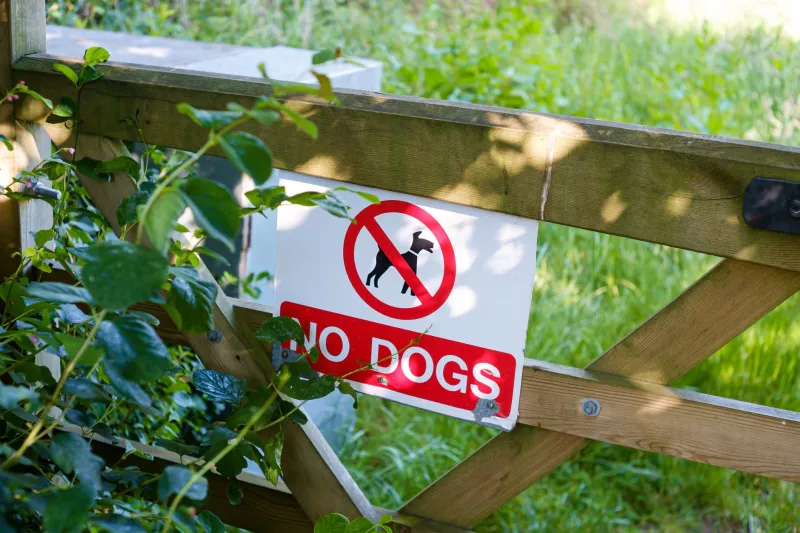
The planning notice is zip-tied to the lamppost outside the Co-op, slightly skew-whiff, and half the village has already read it. Forty-two homes. A new access road off the B-road. A drainage scheme nobody fully understands. By teatime there are three WhatsApp groups, one petition, and a Facebook post that uses the word 'concrete' like a slur.
If you run tabletop games, you are staring at a faction map. Not a metaphor for one — an actual, functioning, fully populated faction map, with territory, resources, grievances, loyalties, a paper trail and an external arbiter who turns up six months later in a sensible car.
Start With the Lamppost, Not the Map
Most worldbuilders do it backwards. They draw the map, then invent people to argue over it. Planning rows do the opposite, and the result is far richer. The land already exists. The argument arrives second, and it drags centuries of context behind it like a coat caught on a gate.
So next time you open a campaign document, write the notice first. Four lines of bureaucratic prose pinned to a post. What is proposed, where, by whom, and by when objections must be lodged. That single page will generate more playable tension than a page of invented history, because it forces you to answer: who reads this and feels their stomach drop, and who reads it and feels quietly, guiltily pleased?
Two Camps Is a Lazy Map
The instant you frame a dispute as NIMBY versus YIMBY, you have flattened it. Real rows are a mess of overlapping interests that only look like two sides from the back of the room.
Consider what a green-belt application actually drags into the open. There's the farmer whose side gate has been used as a shortcut for thirty years and who is furious about the new kerb. There's the family in the starter home who cannot afford to stay in the village their kids go to school in, and who quietly want the houses built. There's the parish council, which has no real power but immense social weight. There's the ramblers' association, the drainage board, the developer's consultant who has done this a hundred times, and the one retired surveyor who reads every appendix and has become, by accident, the most dangerous person in the room.
Give every one of those a coherent interest and a coherent fear. Not a moral position — an interest. The farmer doesn't care about housing policy; he cares about his gate. The parish councillor doesn't hate newcomers; she has watched two previous schemes promise a village green and deliver a balancing pond. Once you can state each faction's interest in one clean sentence, you have a map you can actually run.
The Consultation Is a Playable Document
Here is the move most tables miss: the consultation itself is an encounter.
Set a deadline. Give the players a stack of forms, a room with terrible chairs, and a rule that every objection must cite a specific policy clause. Watch what happens. Half the party will want to write the strongest possible objection; the other half will realise that a badly worded objection is worse than none, because it hands the other side ammunition. That is a skill challenge with real teeth, and it costs you one handout.
Better still, run the village hall meeting as a scene with a strict turn order. Three minutes per speaker. The chair is neutral but tired. Someone has brought a laminated map. Someone else keeps saying 'infrastructure' in a way that suggests they have never queued for a GP appointment. The players are not there to win the vote — there is no vote — they are there to be seen, to plant a phrase that ends up in the minutes, and to work out who in the room is actually persuadable.
The Inspector Arrives
Every good faction map needs a power above the factions. In a planning row it is the inspector: a figure who arrives from outside, reads the file, weighs the evidence and issues a ruling nobody is entirely happy with. Use that.
An external arbiter is the single best tool for stopping table politics from calcifying. If the players can simply grind the village down, the campaign becomes a siege. If the inspector can overturn everything on a technicality — a habitat survey missed, a footnote in the local plan ignored — then the players have to build a case, not just a majority. And crucially, the inspector is not a villain. They are a process with a face on it, and processes are far more interesting to play against than people.
Draw It in Layers
When you actually sit down to map it, resist the urge to draw one line. Real contested land carries at least four overlapping claims: the ancient parish boundary, the 1930s covenant, the 2010s housing allocation, and the footpath that everyone uses and nobody officially owns. Draw each in a different colour, and let them disagree. The best sessions happen in the slivers where two layers contradict each other.
Sharp Play, Not Sneering
One hard rule before you take this to the table: do not lift your actual neighbours wholesale. Composite them. Change the names, muddle the details, give the angry man at the back a reason you invented rather than a reason you overheard. The pleasure of this approach is that it makes faction play feel real — grounded in drains, deadlines and parish minutes rather than dark lords and prophecy. The moment it becomes a sketch show about people you actually know, you have lost the thread.
The green belt, when you get right down to it, is a rumour with a fence around it. Which is exactly what a faction map is: a set of agreed fictions about who owns what. Print the notice. Pin it to the board. Let the arguments begin.