The Inlay of the Land: Lore Lessons from the ZX Spectrum’s Photocopied Manuals
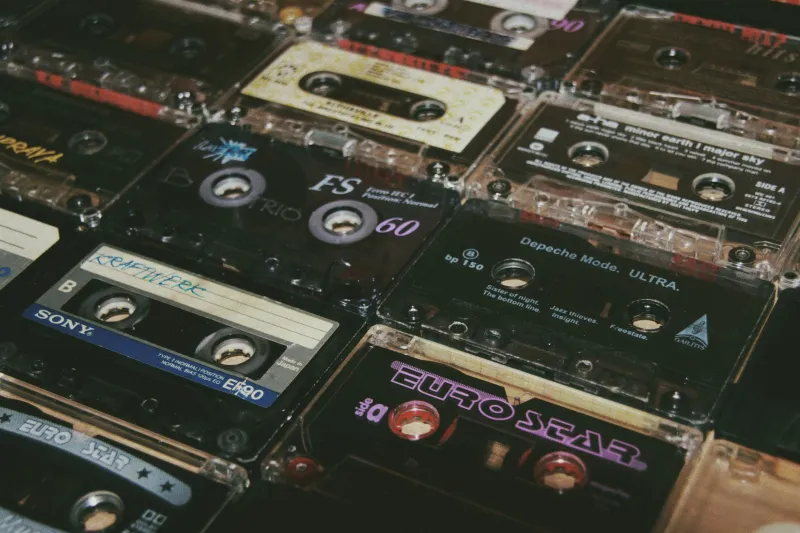
There is a very specific smell to a second-hand Spectrum game. It is not quite paper, not quite plastic, and not quite the inside of a WH Smith carrier bag in 1984. But open the cassette case and you will often find the real artefact: a thin manual, maybe photocopied, maybe typed by someone who clearly had one eye on the clock and the other on a kettle. It explains just enough. It leaves out almost everything else. And somehow, that is why it worked.
Before wikis, before quest logs, before the modern habit of stuffing a forty-hour game with a searchable encyclopedia of every herb and dynasty, British 8-bit games often handed you a world in fragments. A paragraph of fiction. A control scheme. A hand-drawn map with three suspicious blank spaces. The rest was yours to imagine, argue about in the playground, and redraw on the back of a maths book.
That approach is worth revisiting. Not out of nostalgia, but because it is a genuinely useful design discipline for anyone building a tabletop setting, an indie game, or a small-press campaign world in 2026.
The manual was the map
Spectrum manuals rarely began with a lore bible. They began with a tone. You might get a few lines of portentous text, a list of keys, and a sketched map that looked like it had been passed through a school photocopier twice and once through a puddle. The fiction and the interface were tangled together. You were not reading background material before the game started; you were being briefed by someone inside the world, or by someone who had found the world’s scraps and stapled them together.
That is a very different proposition from the modern codex. A codex says: here is everything, arranged alphabetically, with cross-references. A Spectrum inlay says: here is a rumour, a rule, and a half-legible warning about the eastern marshes. Good luck.
For 2026 worldbuilders, the lesson is not to be deliberately obscure for the sake of it. It is to treat lore as an artefact rather than a database. A player handout, a one-page zine, a loading screen, an item description, a folded map with a coffee ring on it — these can carry more atmosphere than ten thousand words of chronology because they imply a world beyond the page.
Constraint as a lore engine
The Spectrum had 48K of memory, a loading screen that could take longer than a school break, and no room for a thousand NPCs with unique opinions on tax policy. Designers had to imply. A single sentence about a ruined abbey could suggest centuries of religious dispute. A map with a road that stopped at a forest edge could make the forest feel dangerous without a single stat block.
British developers were especially good at this because the whole scene was scrappy. Games were made in bedrooms, sold through mail order, advertised in magazines like Crash, and packaged by people who knew that the cassette was the product and the manual was the shop window. The result was lore with fingerprints on it: typos, jokes, sudden shifts in register, a page that looked like it had been typed on a machine with a grudge.
Modern creators can borrow that discipline without pretending everything must look cheap. Constraint is a technique, not an aesthetic. Ask what your world sounds like when it only has two pages to introduce itself. Ask which details are load-bearing and which are just comfort blankets for the designer. If your setting cannot survive being summarised in a cassette inlay, it may be because the setting is doing too much explaining and not enough suggesting.
Write like the tape might not load
A Spectrum manual could not assume the player would reach the end. The tape might fail. The game might crash. The child might lose interest and go outside. So the manual had to make the world feel worth the effort immediately. It had to be evocative, practical, and a little bit odd.
That is a useful test for any 2026 campaign pitch or indie game intro. Can you make someone care about the world before they have played a single turn? Can you give them a rule, a rumour, and a reason to draw their own map?
The best Spectrum inlays also trusted players to be co-authors. They left gaps because there was no other option, but those gaps became part of the experience. Kids filled them with invented kingdoms, house rules, and arguments in the school corridor. A world that leaves room for that kind of play is a world that lasts.
Three exercises for 2026 worldbuilders
First, try the two-page inlay. Describe your setting in 300 words, add a rough map, and deliberately leave three areas blank. Do not fill them in later unless play demands it. Second, run the photocopy test. Print your lore handout in black and white, at a slightly crooked angle, and see whether it still feels inviting. If it only works as a glossy PDF, the ideas may be doing less work than the layout. Third, allow one typo to become canon. Not a sloppy mistake, but a deliberate error that suggests an in-world scribe, a mistranslation, or a rumour that has drifted.
The ZX Spectrum’s manuals were not all good. Some were impenetrable. Some were barely manuals at all. But the best of them understood something that 2026’s worldbuilders can easily forget: lore is not a download. It is a conversation. The cassette case was small, the photocopy was poor, and the map had a blank corner. That was often enough to start a world.
So before you write another fifty-page setting bible, try loading the gap. See what your players put there.