Two Pence of Deep Time: What Britain's Seaside Arcades Still Teach Indie Worldbuilders
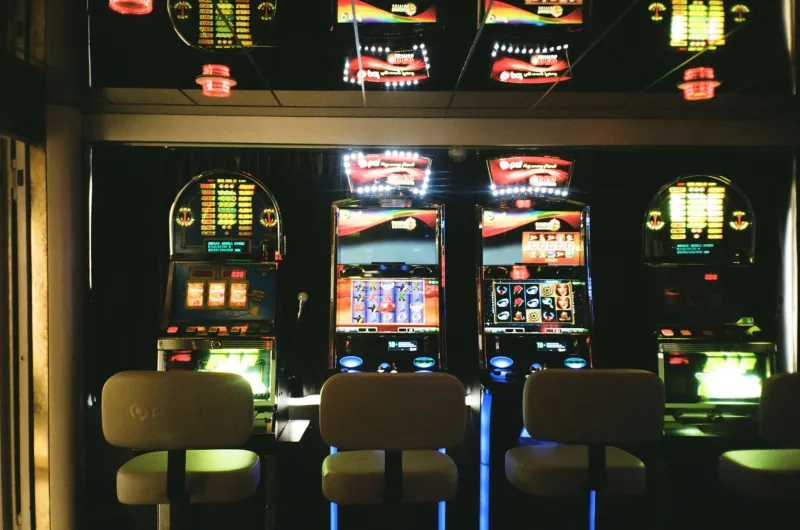
It is raining on the front at Walton-on-the-Naze, which is the correct weather for this. The pier is half-shuttered, the tide is doing that grey English thing, and the arcade by the ramp smells of hot carpet, coins and salt. Two teenagers are fighting over a claw machine. A man in a fleece has been on the same 2p pusher for twenty minutes and looks like he intends to be there at closing. Nobody has explained anything to me. I already understand the whole world.
That is the trick, isn't it. No opening cutscene, no lore tab, no NPC with a name badge and three paragraphs about the old kingdom. Just a room, a set of rules, and about four decades of human behaviour smeared into the carpet. In 2026, with indie studios writing enormous setting bibles before they've blocked out a single room, it's worth asking what these cramped, noisy, faintly sticky buildings get right.
The Cabinet Is a Ruin With a Backstory
Find a surviving Sega Rally cabinet and look at it properly. The marquee has gone the colour of weak squash. Somebody's initials are scratched into the side panel. There's a sticker for a long-closed amusement supplier in Peterborough. The steering wheel has a worn patch exactly where a right hand goes.
None of that was authored. All of it is canon.
This is environmental storytelling of the cheapest and most effective sort. The cabinet isn't a prop from a generic 1990s; it is the 1990s, decaying in real time, with a maintenance history you can read off the scuffs. When an indie game builds a derelict arcade level, it usually over-decorates — ten crisp posters, a neat stack of crates, three readable notes. Real arcades are far stingier and far stranger. One blown bulb. One laminated notice. The sense that the last person to dust in here had a different job title.
Give your players incomplete evidence and let the decay do the writing.
The Lore Is Laminated
Nothing in a British arcade is explained by a character. It's explained by a sheet of A4 in a plastic wallet.
Please do not bang the machine. 2p machines are for 2p coins only. Prize every time — see attendant. A biro line at the bottom: NO refunds, ask for Kev. There's a Kev. You'll never meet Kev. You now believe in Kev completely.
This is a specific worldbuilding discipline that games keep fumbling: text placed in the world, written by someone with a job, a temper and a limited vocabulary. Not a wiki. Not a codex. A sign taped up in frustration at 11pm.
Try this in your next build. Every piece of readable text should imply an author, a grievance and a date. If it could have been written by the developer, rewrite it as someone who works there.
Ritual Is a Dialogue System
The 2p pusher requires no tutorial because it teaches through repetition and mild loss. Coins go in, the shelf shifts, something tumbles, and the whole emotional register of the machine — patience, greed, the tiny indignity of it — arrives without a word.
Watch the regulars. They have routines: the same machine, the same side, the same order of operations. They don't need a quest log. The ritual is the quest log. Arcades survive because they are places people return to on purpose, and repetition in a fixed space generates meaning faster than any amount of authored dialogue.
Indie developers chasing atmosphere usually reach for the moody lighting first and the routine second. Flip it. Design a loop worth repeating, put it in a room with a shape players learn, and the lore will start accruing on its own — the way a bus shelter accrues graffiti.
The Leaderboard Is a Live Server
On the wall behind the counter, a high score table in biro. Dates. Initials. A correction taped over a correction. Someone from Clacton. Someone who was nine in 1998 and is now in their thirties and still technically on the board.
That's competitive play with a persistence layer made of stationery. It also quietly resets — new cabinets, new tables, new names — which is exactly the seasonal logic UK scenes have been warming to. The board is local, small, and utterly gripping to the six people who care about it. Depth doesn't require scale. It requires ownership.
If you're building a leaderboard into an indie title, ask what the arcade asks: whose name is on this wall, and why does it sting?
The Loot Table Is Local
Prize cabinets are the best example of bespoke loot design in the country. A wall of plush toys, cheap keyrings, novelty mugs, one genuinely good item at the top of the shelf that costs four thousand tickets and is probably impossible.
The prizes are cheap and they are specific — supplied by whoever does the round, themed to the town, occasionally two years out of date. That specificity is what makes them feel earned. Generic legendary sword; local legendary sword bought in bulk from a cash-and-carry in Essex. The second one gets remembered.
Build loot that could only come from your setting. Not from a fantasy setting — from your setting, on a particular street, in a particular year.
What to Steal, and What to Leave in the Sand
Take the economy of implication. Take the decay-as-narrative. Take the way a single handwritten notice can carry more characterisation than a voiced companion. Take the confidence to let a player stand still in a room for twenty minutes doing something objectively pointless and mildly profitable.
Leave the actual business model on the pier, mind. Nobody needs a gacha tutorial from Clacton.
But here's the real lesson, and it's the one that stings. The seaside arcade is a design document that was never written down. It was built by operators, technicians and players over generations, patched by hand, and it still communicates a complete world to anyone who walks in out of the rain. If your indie game needs a codex to explain why the place feels the way it does, the room isn't finished yet.
Go to the coast. Spend two quid. Read the laminates.