Speak Like You’re From Somewhere: Regional Voices Are UK Fantasy’s Secret Weapon
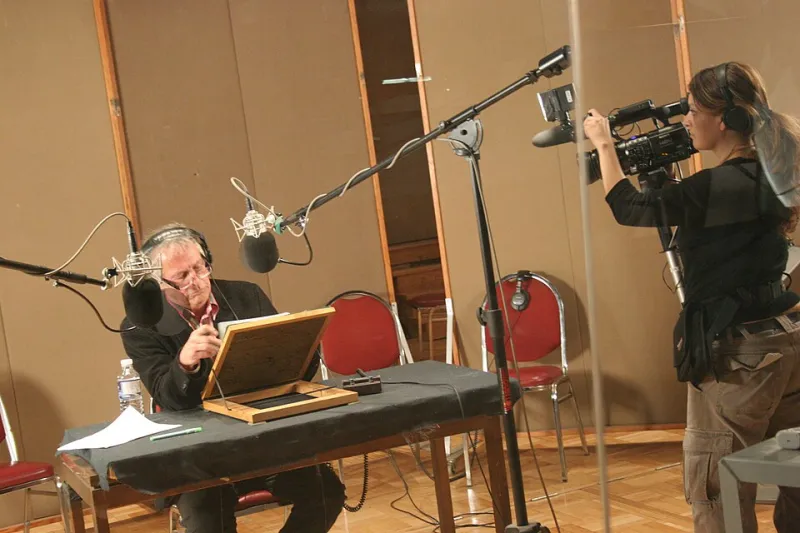
Photo: Kat Baulu, CC BY 2.0, via Wikimedia Commons
The Default Voice
UK fantasy has a default voice problem. It is not that Received Pronunciation is bad. It is that it is often the only voice in the room. The villain is posh. The narrator is posh. The elf is posh with a slight lisp. Everyone else gets a generic burr that sounds like a farmer from nowhere in particular. That is not a UK fantasy. That is a costume shop.
Regional accents are not decoration. They carry class, place, migration and history. A Scouse artificer sounds different from a Cornish smuggler because those places have different stories. A Brummie necromancer is not a joke. A Welsh druid is not a mood. If UK fantasy games want deep lore, they need to sound like the UK.
What an Accent Carries
“An accent is not a hat you put on for a scene,” says Priya Nair, a voice actor and accent coach based in Leeds. “It is a whole set of assumptions about where you are from, what school you went to, what your parents did and whether people trust you. If you ignore that, you are just doing a bit.”
That is the difference between representation and caricature. A regional voice can signal power or its absence. It can mark a character as an outsider in their own city. It can hint at a childhood, a migration, a job. In a fantasy world, that is lore you do not have to write down. It is already in the mouth.
Actual plays and indie RPGs are starting to notice. A few UK actual play groups now cast regionally on purpose. Not to tick boxes, but because it makes the world feel bigger. A council chamber where everyone sounds the same is a council chamber with no politics. A tavern where everyone sounds the same is a tavern with no regulars.
The Posh Villain Problem
The posh villain is a UK fantasy staple. It is also a missed opportunity. RP can be a signal of inherited power, but if every villain has it, the signal becomes wallpaper. The same goes for the “generic northern” blacksmith and the “vaguely Scottish” dwarf. These are not accents. They are shortcuts.
“If your only regional voice is a comedy accent, you have not written a character,” says Tom, a Bristol-based GM who runs a long-running actual play. “You have written a punchline. Players can tell. They stop believing the world.”
The fix is not to ban RP. It is to make it one voice among many. Let the villain be RP. Let the hero be Brummie. Let the quest-giver be Geordie. Let the dragon be Welsh. Let the merchant be a code-switcher who moves between accents depending on who is listening. That is not just more interesting. It is more true to the UK.
Casting Beyond the Usual Suspects
Practical advice for designers and GMs: start with the world, not the accent. Ask what a region in your setting does for a living. Ask who has power there. Ask who moved there and who was pushed out. The accent will follow. If you are casting, hire actors who actually speak that way. If you are a GM, listen to native speakers before you perform. Not one clip. Many. Different ages, different classes, different moods.
Build an accent bible. Note rhythm, not just vowels. Note which words a character clips and which they stretch. Note how the accent changes when they are angry, tired or trying to impress someone. Avoid catchphrases. Avoid “eh up” as a replacement for a personality. Avoid putting a regional accent on a character who is meant to be stupid. Avoid making the accent the joke.
Performing Without Caricature
For GMs, the safest route is specificity. A broad “Yorkshire” accent is a blur. A specific rhythm, a specific vowel, a specific bit of local slang used sparingly, is a character. Practise with recordings. Get feedback from people who know the accent. Do not argue with them. If you are not sure, keep it light. A hint of place is better than a pantomime.
There is also the question of consent. Regional accents are not costumes, but they are also not sacred. The difference is intent and execution. A player using their own accent is not the same as a player doing a bit. A character who code-switches is not the same as a joke about a dialect. Be honest about what you are doing. If it is a comedy voice, make sure the comedy is not just “they sound poor”.
A UK That Sounds Like Itself
The UK is not one voice. It is a racket. It is a train carriage where five conversations overlap and none of them sound the same. Fantasy games can borrow that. They can let a world sound like a place with history, class and weather. They can let regional voices carry lore without turning them into caricature.
The next time you write a villain, ask why they sound posh. The next time you write a blacksmith, ask why they sound like nowhere. The next time you run a game, ask who is missing from the room. The answer is usually in the accent. Use it.