The Dame, the Boo and the Dice: A Panto Playbook for Festive One-Shots
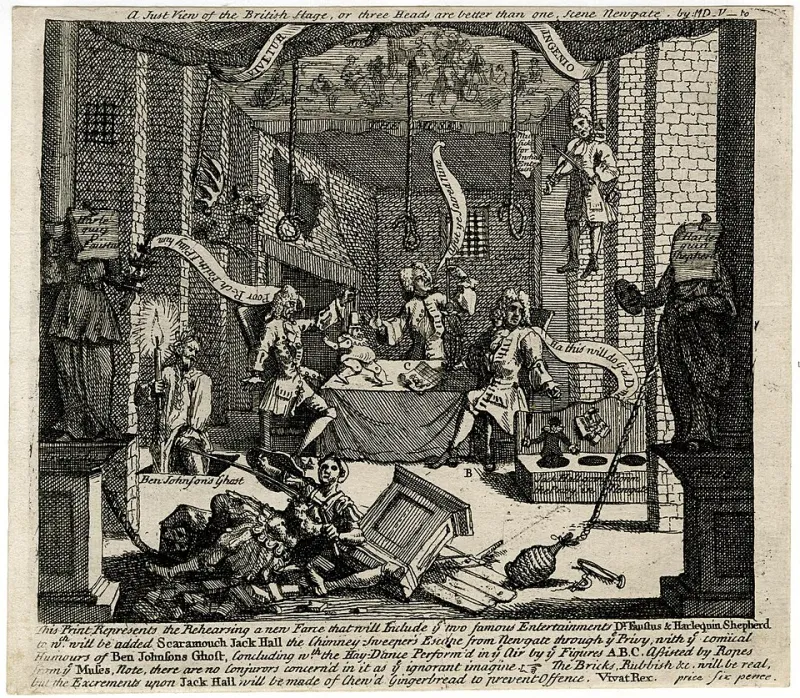
Photo: Unknown, Public domain, via Wikimedia Commons
December is coming for your gaming calendar. Someone in the group chat is already suggesting a festive one-shot, and someone else is pretending they are not. The usual options are a snowbound tavern, a goblin-run grotto or a forced carol-based puzzle. All fine. All a bit safe. If you want a seasonal session with real energy, pinch the structure of British pantomime. Not the fairy-tale plots — the machinery underneath them.
Panto is one of the UK’s most reliable pieces of live audience engineering. It has stock roles, clear stakes, ritualised audience participation and a villain who exists to be loudly rejected. That is not a million miles from a good one-shot. As 2026 draws to a close, here is a practical playbook for turning panto beats into tabletop beats without asking your players to wear a frock coat unless they really want to.
Start With a Promise, Not a Plot
A panto does not open with a complex lore dump. It opens by telling the audience what kind of night this is. You will boo the villain. You will warn the hero. You will probably end up singing something. The rules are clear before the plot starts.
Treat that as a session zero in disguise. Open your one-shot with a short, diegetic welcome: an NPC town crier, a fairy on a unicycle, a landlord with a suspiciously theatrical announcement. Use it to state tone, boundaries and the shape of the evening. Is this silly, spooky or sincere? Are we doing voices? Is anyone allowed to call for a pause? Then ask each player for one thing their character wants from the festival. That is your panto promise: everyone knows what they are here for, and nobody is tricked into a five-hour tragedy.
Cast for Function, Not Realism
Panto stock characters are not deep psychological portraits. They are functions. The Principal Boy drives action. The Dame runs the room. The Villain applies pressure. The Comic acts as audience proxy. The Good Fairy delivers exposition and the occasional plot patch.
You do not need to force your players into those boxes. Instead, build NPCs around those functions. Give the villain a clear desire and a theatrical entrance. Give the dame-like NPC social control and useful information. Give the comic permission to ask the questions the players are thinking. If your table enjoys archetypes, let players temporarily occupy a function for a scene — the rogue becomes the Principal Boy during a chase, the cleric becomes the Good Fairy during a ritual. It keeps the one-shot legible without flattening characters.
The Boo Is an Encounter Timer
In panto, the boo is not random noise. It marks a villain’s entrance, raises the room’s energy and reminds everyone whose side they are on. At the table, that translates into a useful pacing tool.
When your villain appears, give the players a reaction beat before initiative. Let them heckle in character. A good rule: once per scene, a player can interrupt a villain’s monologue with a panto-style jeer, and it costs nothing. It does not grant a mechanical bonus unless you want it to. Its job is to give the table a ritual moment of agency. The villain should react, too — sneer, pause, threaten, carry on. That rhythm stops villain speeches from becoming a GM solo and tells everyone that this is a shared room.
The Dame Runs the Room
The dame is often treated as a costume joke, which undersells the role. A good dame is a host, negotiator, comic and emotional anchor. She can hand out plot, calm a crowd, poke the villain and remind the audience that they are part of the show.
Steal that for your NPC design. A dame-like innkeeper or guildmistress can be the one who calls for a pause when the table gets too heated, hands out the next clue, or asks the players what they actually want to do. She is not there to solve the adventure. She is there to keep the adventure social. And keep her sharp — panto dames are usually the most competent person on stage. Making the dame merely ridiculous is a waste of a perfectly good NPC.
The Singalong Is a Skill Challenge With a Low Floor
Panto singalongs work because nobody needs to be good at singing. The point is collective participation. That is a useful model for RPG skill challenges that do not punish quiet players or reward only the loudest optimisation brain at the table.
Build a challenge where every player contributes one thing: a line of a song, a rumour, a promise, a small physical action. The group succeeds by accumulating contributions, not by hitting a single high DC. Example: the village will not stand against the villain until the party gives them a song to sing. Each player adds a verse, a gesture or a reason to be brave. The GM counts distinct contributions, then narrates the crowd joining in. Players who do not want to perform can write a line, draw a symbol, or simply describe their character humming. Low floor, high ceiling, everyone included.
Behind You: Dramatic Irony and the Choreographed Chase
The ‘it’s behind you’ routine is a masterclass in cooperative warning. The audience knows more than the hero, and the hero is temporarily oblivious. At the table, you can use that as a chase or infiltration structure without taking agency away.
Set up a threat the players can see but their characters cannot yet confirm. Then give them a warning action: shout, signal, throw something, create a distraction. Make table talk diegetic for that scene. If a player spots the ambush, their character can act on it only if another character passes the warning. This turns a standard chase into a panto-style set piece: the players are not just rolling dice, they are actively looking after each other. It also gives you a clean reason to let players coordinate without it feeling like cheating.
The Villain’s Exit and the Transformation Scene
Panto villains rarely get a grim, quiet death. They get expelled, booed, outwitted and sent packing by a community that has decided to stop being frightened. That is a strong ending for a festive one-shot. The final encounter should not just be a damage race; it should be a public rejection of the villain’s claim.
Use a transformation beat before the finale. In panto, the coach turns into a pumpkin or the kitchen boy becomes a prince. At the table, let the players spend tokens they have gathered — favours, rumours, promises — to change the final scene. They can reveal the villain’s weakness, turn the crowd, open a secret door, or restore something broken. The finale becomes a payoff for the whole session rather than a boss fight bolted onto the end.
A Five-Beat Panto One-Shot
For a three-hour festive session, try this skeleton:
- Welcome: an opening scene that states tone, boundaries and the festival’s problem.
- Villain’s claim: the antagonist makes a public demand and gets booed.
- Dame’s aid: a host NPC gives the party a safe base and one useful clue.
- Behind-you chase: a set piece built on warnings, distractions and dramatic irony.
- Singalong finale: the community confronts the villain, and every player contributes to the resolution.
That is panto structure, not panto cosplay. It gives you pace, participation and a villain who is fun to hate without being a grim slog. Keep the safety tools visible, offer opt-outs from performance bits, and use local references lightly — a village hall, a sticky carpet, a suspicious raffle. The point is shared rhythm, not forced jollity.
Panto has survived for centuries because it knows how to hold a mixed room together. Your festive one-shot can borrow that trick. Set the rules, cast for function, let the boo do some pacing work, and end with the crowd on its feet. Oh yes it can.