Trolley Wights and Checkout Oracles: Running the Retail Park as a Megadungeon
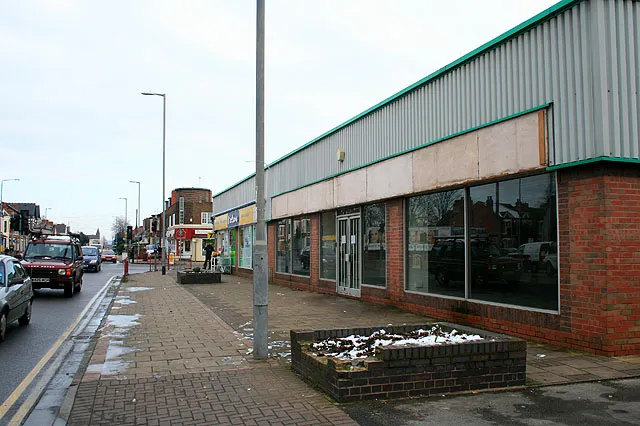
Photo: David Lally, CC BY-SA 2.0, via Wikimedia Commons
Every UK gamer knows the site. You come off a roundabout, follow a slip road past a petrol station, and arrive on a plateau of tarmac where a cinema glows like a beacon and a B&Q hums under fluorescent light. It is supposed to be a non-place. It is actually one of the most shared campaign settings we have. More players have queued in a Costa here than have stormed a wizard's tower. Use that.
The Site Plan Is the Dungeon Map
Do not draw a castle. Draw the retail park site plan. Start with the approach: the roundabout is a gatehouse, the petrol station is a checkpoint, the dual carriageway is a moat you cross at your peril. The car park is the outer ward, a trackless waste of white lines and pedestrian islands. The retail terrace is the inner ward. The cinema is the boss arena. The service corridor behind the units is the secret level.
Keys matter more than gold. A trolley token, a parking app, a cinema ticket, a receipt from the food hall. Each one opens a different kind of door. Lamp posts become watchtowers. Bollards are ward stones. The parent-and-child spaces are a disputed sanctuary. Map it to memory, not to scale.
Factions of the Plateau
A retail park is a political map with a car park. Give each unit a faction with a mundane want.
- The Orange Apron: the B&Q staff. They know every aisle and every shortcut. Neutral until someone threatens the timber stock or blocks the trade counter.
- The Court of the Food Hall: the M&S or Waitrose crew. They control finite sandwiches and the meal-deal economy. Information travels faster here than anywhere else on site.
- The Screenwardens: cinema staff. They own the darkness, the schedule and the right to tear a ticket. Their calendar is a ritual clock.
- The Trolley Wights: abandoned trolleys that gather in knots at the far end of the car park. They are not evil. They are just very hard to move.
- The Click-and-Collect: couriers, parcel lockers and pick-up desks. They are information brokers who speak in QR codes and order numbers.
- The Bench Cohort: teenagers outside the chain pub. They know every escape route, every blind spot and every member of staff who can be talked round.
Every faction wants something small: a clean toilet, a plug socket, the last parking space, a signal strong enough to load a page. That is your political map.
Rituals, Clocks and the Ninety-Minute Doom
The retail park runs on clocks. Opening time, lunch rush, school out, cinema times, closing. Use those as dungeon turns. Every hour, the patrol changes. At 17:30 the food court fills. At 20:00 the cinema queue snakes past the pick-and-mix. At 23:00 the shutters come down.
Then add the ninety-minute parking limit. That is your doom clock. Stay too long and a warden patrol arrives, or worse, a clamp. The players can see the timer. They will argue about it. Good.
Rituals give the place texture. The Saturday queue at the recycling point. The meal-deal triangulation between Boots, the food hall and the chain bakery. The Christmas lights switch-on as a festival. Black Friday as a siege. These are not set dressing. They are the rhythm of the dungeon.
Encounters With a Receipt
Do not fill every aisle with monsters. Fill it with inconveniences that have teeth. A trolley wight blocks the aisle. A queue elemental forms at the till. A bored security guard asks for proof of purchase. A receipt is a passport. A returns desk is a courtroom. The lighting aisle is a labyrinth with a very specific smell.
When you do use monsters, keep them mundane and metaphorical. Loss Prevention is an ogre with a radio. Health and Safety is a stone golem made of clipboard and lanyard. The child screaming in Home Bargains is a banshee, but only for one scene. The best encounters are still human, and the best treasure is a working plug socket.
The Boss Arena
The cinema is the boss. Pick a screen. The projector is an artifact. The film is a portal, or a prophecy, or just a very loud two hours. The car park at 17:00 is another boss, a creature of reversing lights and blind spots. The last parking space is the treasure everyone wants and nobody enjoys.
Or make the boss the manager with keys to every shutter. Defeat them by negotiation, by understanding the rota, or by finding the one thing they actually need. That is more satisfying than rolling initiative.
Running It at the Table
For a one-shot, make the players teens trying to see a film without paying, or staff on a closing shift when something goes wrong in the stockroom. For a campaign, let the factions compete over a new unit. Use a simple heat mechanic: loud actions raise security attention. The car park is safe but slow. The service corridors are fast but risky. A trolley token is inspiration you can spend once.
For an indie game level, compress the whole site into a loop: car park stealth, retail terrace social, cinema boss. Put the tutorial at the bus stop. Put the save point in Costa. Let the player learn the map by getting lost in it.
Why It Works
Fantasy castles are exotic. Retail parks are intimate. Players know the specific depression of a Sunday cinema, the smell of a B&Q, the way a chain pub feels at 6pm. That shared memory does the worldbuilding for you. The dragon is not under the retail park. The retail park is the dragon: a creature of convenience, fluorescent light and endless car park. Run it, and your players will recognise every corridor.