The 18:07 Is Coming: Why Missed Connections Make Better Boss Fights
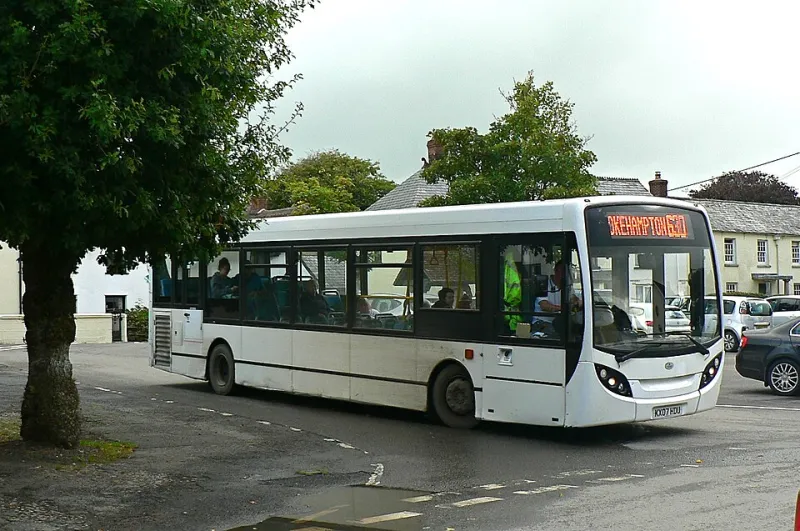
Photo: john bristow, CC BY-SA 2.0, via Wikimedia Commons
There is a particular kind of dread that settles over a rural bus stop after six in the evening. The light is going. The timetable is laminated but somehow still damp. A single sentence — No service on Sundays and public holidays — sits there like a curse in six-point type. If your tabletop campaign has never felt that dread, you are leaving one of Britain’s sharpest GM tools in the shelter.
Timetables are clocks the players can see, argue about and try to beat. They are not abstract countdowns invented by the GM. They are printed promises made by an institution that may or may not care whether you get home. That tension is exactly what a good campaign clock needs.
The timetable is a social contract with teeth
A fantasy countdown often feels like homework: the GM says the ritual completes in five rounds, and everyone nods. A bus timetable feels like a negotiation. The 18:07 is not a number; it is a bus company, a driver, a route, a set of passengers and a very specific definition of “approximately.” When players start asking whether the 17:42 stops at the village hall or only on request, they are already inside the fiction.
This is deep lore through infrastructure. The bus company becomes a distant faction. The driver becomes a gatekeeper with a clipboard and no interest in your backstory. Sunday service becomes a cosmic law. Sharp play comes from the fact that everyone at the table understands the stakes without needing a lore dump.
Three dials, one page
You do not need a full transport simulator. You need three visible clocks, drawn on an index card or scribbled on the battle mat.
The Service Clock tracks the next departure. Give it four to six segments. Tick it when the party searches a room, haggles with a merchant, tends a wound, argues about who is carrying the lantern, or does anything that takes scene time. When it fills, the bus arrives — or leaves. The players can see the cost of every extra conversation.
The Connection Clock tracks a transfer. Maybe they need the 16:12 to reach the junction, then the 16:48 to reach the coast. If the first clock fills before they board, the second becomes a problem: a taxi rank, a rail replacement coach, or a very long walk down a lane with no pavement. This is where missed connections become story rather than failure.
The Human Clock tracks patience. The driver has three segments before they close the doors. The taxi queue has two cars and four factions. The station clerk has one favour left before they go on break. This clock is social, not mechanical, and it gives your talkers something to do while the fighters are watching the road.
A missed connection is a consequence, not a punishment
The worst use of a timetable clock is to trap the party in a bus shelter and say “nothing happens.” The best use is to let the missed connection change the shape of the session. Three reliable options:
Faction consequence. The party was meant to meet the harbourmaster’s envoy on the last bus. They miss it. The envoy waits, gets cold, and reports that the party is unreliable. Behind the scenes, a rival faction gains a segment on its own clock. The next negotiation is colder, and the players know exactly why.
Chase scene. A rail replacement coach is already pulling out of the station car park. The party has to flag it down, bribe the driver, or sprint alongside it like a bad heist film. Use the coach as a moving dungeon: three rows of tired passengers, one suspicious suitcase, and a driver who will not stop until the next scheduled lay-by.
Forced rest stop. They miss the last bus from a market town. Now they are stuck overnight. The village hall has a fundraiser on. The pub has one room. The taxi rank has one cab and a queue of people who all seem to know each other. This is not downtime; it is a pressure cooker with hand-pulled ale.
The last bus as a boss fight
Run the final departure like a boss with phases, not a simple skill check. The players can see the clock. They know the bus is coming. What they do with the remaining segments is the fight.
Phase one: The Wait. The party gathers information. Is the bus running late? Is the driver on a break? Did someone see a rail replacement coach idling behind the chippy? This is where rumours, local knowledge and a decent Insight check earn their keep.
Phase two: The Hail. The bus approaches. Someone has to signal it, block the road, or convince the driver to stop somewhere unofficial. In a rural campaign, a request stop is a beautiful thing: it exists only if the driver agrees it exists. Make them negotiate with a tired person who has done this route for eleven years.
Phase three: The Squeeze. There is one seat left. Two NPCs need it. One is a faction courier; one is a frightened kid with a parcel. The party can split, pay, intimidate, persuade or improvise. The clock does not pause for morality.
Phase four: The Fare. The doors close. The bus pulls away. Whoever is on it gets a scene; whoever is not gets a different scene. Do not punish the split — make both halves matter. The players will remember the cold of the kerb more than the warmth of the bus.
The one-page clock sheet
Drop this onto a single A5 card and tick it in the open.
| Clock | Segments | Tick when | On fill |
|---|---|---|---|
| Service Clock | 5 | The party takes a scene, searches, argues or travels slowly | The bus arrives and departs on schedule |
| Connection Clock | 4 | The party misses a printed transfer or delays at a hub | The next leg becomes a taxi, rail replacement coach or long walk |
| Human Clock | 3 | The party pushes their luck with a driver, clerk or queue | Patience runs out; doors close, fares rise, or the queue turns |
Keep it fair, keep it visible
Show the clocks. Tick them publicly. Always leave a second path — the taxi rank, the station, the farm track, the night bus that everyone pretends does not exist. The point of timetable pressure is not to trap the party. It is to make every small choice feel like it matters, and to remind them that the world runs on other people’s schedules.
UK transport is already cruel enough. Your job is not to be crueller. Your job is to make the 18:07 feel like a dragon: distant, dangerous, and absolutely on time.