Fifty Pence of Lore: Building a Campaign World Out of Charity Shop Leftovers
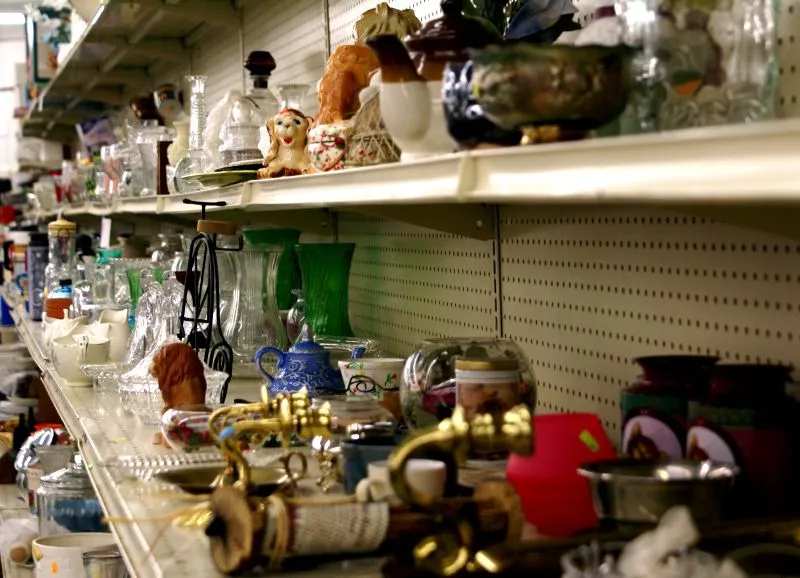
Photo: Valerie Everett, CC BY-SA 2.0, via Wikimedia Commons
Every good campaign setting starts with a question nobody asked. The best ones start with a question nobody asked, bought for 50p from a charity shop on a wet Saturday in Stockport.
Here is what was in the bag: a 1974 Ordnance Survey map of a county that has since been reorganised out of existence, a paperback thriller with somebody else's name written inside in biro, four mismatched miniatures (a knight, a robot, a duck and something unidentifiable in green), and a broken board game missing its rulebook but carrying a beautiful set of cardboard tokens.
That is not a shopping list. That is a setting.
Buy the Weird, Not the Useful
The first rule of found-object worldbuilding is to stop shopping for your campaign and start shopping for questions.
Do not buy the incomplete Monopoly. Do not buy the Warhammer box with three models left in it. Do not buy anything you could have bought new. Buy the thing that makes you go why does this exist — the 1983 geography textbook, the local history pamphlet with the terrible cover, the jigsaw of a cathedral, the piano-accordion instruction manual with the previous owner's annotations.
You are not looking for components. You are looking for the residue of other people's lives, because that is precisely what a setting is made of.
A quick word on manners: charity shops are not a rummage bin with a till. Pay the asking price, do not haggle over 20p, and if a shop is selling something genuinely valuable that has been mispriced, tell them. You are the person who has to roll dice in this world; you should not have to do it with a guilty conscience.
Let the Objects Ask the Questions
Once you are home, spread everything out on the kitchen table and interrogate it. The trick is to let each object supply a fact, a contradiction and a hole.
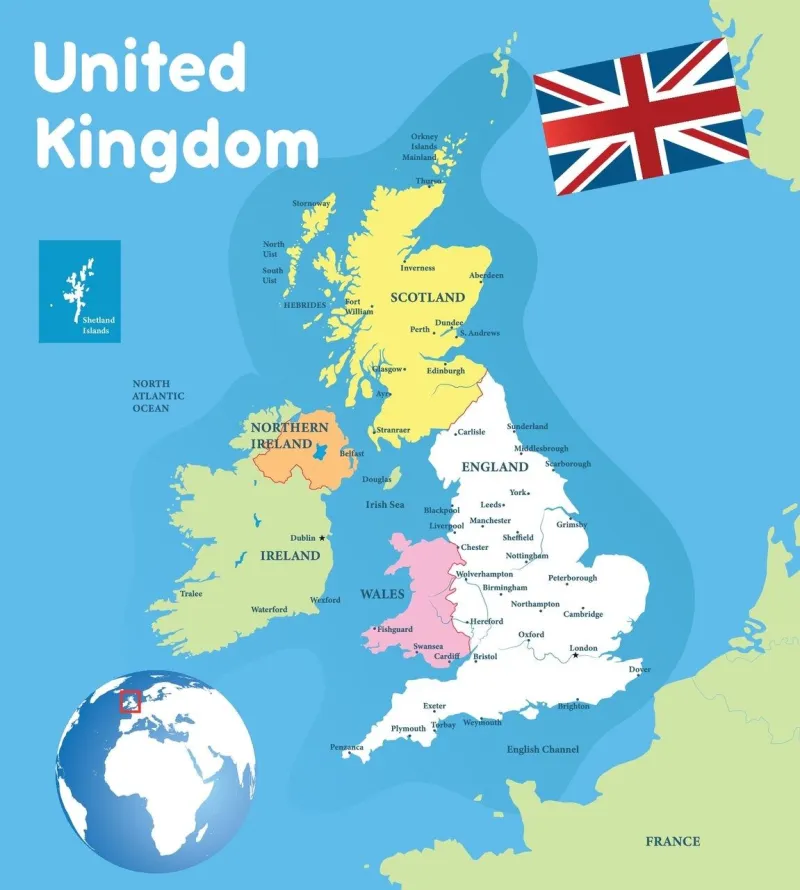
The map. Pick three place names that sound like they mean something. Trace a road that goes nowhere. Find a contour line that suggests a hill nobody would build on. Congratulations: you now have a border, a trade route and a reason for a fortress.
The paperback. Open it at random and take one sentence — not the plot, just a sentence. A line about a man waiting in a car park outside a leisure centre is worth more to your world than an entire pantheon.
The miniatures. Do not explain them separately. Explain why they are standing together. A knight, a robot and a duck in the same frame is not a problem, it is a history. Who knighted the robot? Who is the duck's lawyer?
The broken board game. The tokens are the treasure. Use them as physical props at the table — coinage, faction seals, wounds. Lore that you can pick up and hand to a player sticks in a way that a paragraph never will.
Session Zero at the Kitchen Table
Run the first session with no character sheets and no rulebook. Everybody brings three objects of their own — one from a charity shop, one from their house, one that has to be given away at the end of the night. Lay them all out together.
The only rule at the table is no vetoes, only additions. If somebody says the duck is a god, the duck is a god, and your job is to work out which god. Disagreement is resolved by building, not by deleting.
By the end of two hours you will have a map, four factions, a founding myth and at least one joke that will still be running in eight months' time. Write it down. Photograph the table. That is your setting document.
Britain Without the Shire
Here is where most homebrew worlds go wrong. They reach for the same furniture — elves, taverns, a dark lord in the east — and end up as a slightly damp version of somewhere that already exists in a hundred other books.
Your objects are British. Let your world be, too. Not in a flag-waving way, but in the texture: municipal architecture, coastal towns out of season, allotments with serious politics, a bus service that only runs on Thursdays, motorway service stations as neutral ground, a county council that is somehow older and stranger than the empire it serves.
Think less epic fantasy and more civic fantasy. Weather is a faction. Bureaucracy is a magic system. The pub is a diplomatic embassy, and the landlord knows things.
The trick is to keep the whimsy at arm's length and give it teeth. A village fete is charming for one session; a village fete where the judging has been rigged for four hundred years is a campaign.
The Found-Object Toolkit
A simple loop you can run for any object you bring home:
- Fact. What is it, physically, and what does that imply about who made it?
- Contradiction. What does not fit? Who left the biro name inside the book, and why does it matter?
- Hole. What is missing, broken or unreadable — and who benefits from the gap?
Three passes per object. Six objects is a full setting. Nine is a campaign.
Three Ways This Goes Wrong
Hoarding. You will buy too much. You do not need a shelf of props; you need four objects that pull their weight. If something has not come up in three sessions, it goes back to the charity shop.
Cuteness. Found-object settings can drift into twee. The fix is consequences: if the duck god exists, something is sacrificed to it, and it is not always a metaphor.
The curator's trap. Do not build a museum. No item should be so precious that it cannot be broken, stolen, burned or eaten by the party. The best lore in your world is the lore your players can destroy.
Keep the Receipt
There is something quietly satisfying about a setting you could, in theory, put back on the shelf with a 50p sticker on it. It keeps you honest. It keeps the world small, strange and specific — the way real places are.
Go on. There is a box of paperbacks in the window of the shop on the high street, and one of them has somebody else's name in it.