Pints, Puzzles and a Prize Pool: How to Run a Lore-First Tournament Down Your Local
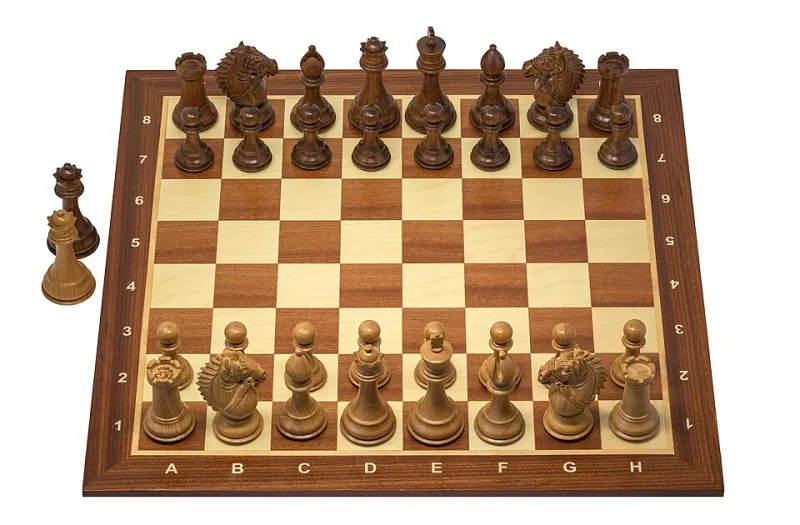
Photo: Wilfredor, CC0, via Wikimedia Commons
There's a particular silence that falls over a function room in Sheffield at twenty to nine on a Thursday. Not the awkward silence of a bad quiz. The good one — forty people staring at a laminated card, trying to work out which of four guild crests is lying to them.
This is a lore-first tournament. It is not a LARP, and it is not a quiz night with a card game bolted on. It's something in between, and it's spreading through UK clubs at a rate that surprises even the people running it.
What "lore-first" actually means
The core idea is simple. You run a normal competitive event — same rules, same pairings, same clock. But between rounds, instead of everyone staring at their phones, teams get a short narrative beat: a dispatch, a puzzle, a choice. Solving it earns points on a separate track. Sometimes it changes a rule for the next round.
That's it. The game stays honest. Nobody's deck gets rewired by a vote. The lore layer sits alongside the competition rather than overruling it, which is the single most important design decision and the one most first-time organisers get wrong.
The Keldergate Irregulars
A good example is a fictional-but-typical scene: a monthly gathering above a café on Kelham Island, twenty-four players, a mid-weight fantasy card game, three rounds across an evening.
Each round is preceded by a dispatch — half a page of in-world newsprint. Last month's involved a flooded river and a missing ferryman. Teams had to decide which of two guilds to back before pairings went up. Backing the ferrymen's guild meant river-adjacent cards cost one less for that round; backing the wardens meant one extra sideboard slot. Neither was strictly better. Both were story.
The organiser, a softly spoken secondary school teacher who has been running events since her university days, puts it neatly: "People got tired of turning up with the same deck as everyone else and losing to the same person. Now they turn up wondering what the river's done."
It costs about £5 a head. The venue makes its money on coffee. Nobody has ever complained about the prize support, because the prizes are a book token and a frankly alarming trophy.
Why it's catching on
Three things, I think. First, meta fatigue is real and it's expensive. Chasing a shifting top-end is a subscription service, and plenty of UK players have quietly cancelled it.
Second, the social contract. A lore-first event gives strangers something to talk about that isn't a bad beat. You can have a rubbish game and still come away having solved the ferryman thing with two people you'd never met.
Third — and this is the underrated one — it's cheap to run. No extra tables, no extra judges beyond the ones you'd have anyway, no software. A printer and a laminator will do.
The template
Here's how to actually put one together.
1. Pick a spine, not a story
You need one situation, not a trilogy. The river has flooded. The guild is lying about why. That's a spine. Write it in a paragraph and don't add to it. Events that try to run a full campaign in one evening fall apart at round two.
2. Five puzzles, not fifty
One per round plus a tiebreaker. Each should take a team three to five minutes, not fifteen. If you're writing a puzzle that requires a whiteboard, cut it.
3. Decide what lore is worth
Keep it small and transparent. A workable scoring frame:
| Action | Points |
|---|---|
| Correct puzzle answer | 2 |
| Best-argued narrative choice (judges' pick) | 3 |
| Match win | 6 |
| Match draw | 3 |
| Spotting a planted inconsistency | 2 |
That last row is the one that makes the format sing. Plant one deliberate error in a dispatch — a date that doesn't match, a name spelled two ways — and watch a room of competitive players turn into detectives. It rewards exactly the close reading they already do.
4. Brief your judges twice
Once on the rules, once on the fiction. Judges need to know the answer to every puzzle and must be allowed to say "close enough, have the point" when a team gets there sideways. Rigid judging kills the mood faster than a bad venue.
5. Timebox hard
Announce, hand out, five minutes, collect, pairings. If a puzzle runs long, it eats into round one and the whole night slides. Put a visible timer on a screen and stick to it.
6. End on a reveal
Save your best paragraph for after the final round. Read it aloud. It takes ninety seconds and it's the bit people talk about in the pub afterwards, which is the actual point of the whole exercise.
7. Prizes and the pub bit
Book tokens. A painted miniature. Something silly and specific to the fiction. Then move everyone to the bar and let the debrief happen naturally.
What goes wrong
The loudest-person problem. Puzzles get solved by whoever shouts first while three quieter players check their phones. Fix: require a written answer from each team, submitted by a nominated scribe who rotates every round.
Lore that overrules the game. If a narrative choice invalidates someone's deck, you've broken the trust that lets the format work. Advantages should be marginal and symmetric.
Accessibility. Large print, plain language, and at least one puzzle per event that doesn't rely on colour or on visual pattern-matching. Pub venues are loud; assume nobody can hear you and put the briefing on paper.
The pub quiz drift. The moment your puzzles can be answered without reading the dispatch, you've built a quiz. The story has to matter to the answer.
A sample dispatch
From the Keldergate Register, 14th of the wet month.
The river rose four feet overnight. The ferrymen's guild says the sluice gates held. The wardens say the gates were never closed. Both have produced paperwork. Both pieces of paperwork are dated the same day, which is not possible, because the clerk who signed one of them has been dead since spring.
Tonight, you will choose who to believe.
That's a whole evening's atmosphere in seventy words and a printer. If your local scene is tired of the same top table, it's a cheap experiment worth making — and the laminator will pay for itself by round two.